The thing you believe you have is the one you cannot find. Deciding that you “know something” is the very thing that prevents you from developing actual knowledge. But what is knowledge, actually? How can we determine something unquantifiable? I see knowledge as the capacity to apply oneself in any given situation that requires the knowing, the success of application will be the measurement of knowing; self-assessment cannot give you that.
People often confuse believing in something with knowing it. Our psychology works in such a way that any decision that we make internally, on the level of emotion, our mind will find a way to justify. In his book The Righteous Mind, American psychologist Jonathan Haidt describes this process very well: when a person has a disposition toward a certain political belief, for example, he will filter out of all the incoming information only that which supports the belief, leaving out everything that could compromise it. This happens because we often conflate our ideas with our identity, and facts that would shatter our belief system are perceived as “dangerous,” because they threaten the integrity of this identity, the very thing that makes us functional in the world. This phenomenon is very easily explained by our biology: when we are set firmly on an opinion, we do not have to think about other options anymore, so it saves us huge amounts of energy. This is why so many people are blind to any kind of evidence that is presented to them if it contradicts what they already believe. It is a biological feature of our species that has helped us survive, but it rather undermines us in the modern world. The philosophical error of reducing knowledge to beliefs we hold rather than capacities we enact amplifies the psychological tendency to identify with ideas.
This psychological tendency makes people base their map of the world on the ideas they hold rather than on empirical facts. This happens because many people lack actual life experience in the things they are talking about. The possession of information is confused with an understanding of a phenomenon. And, as Ido Portal often says, most of it is “rumours about rumours” - someone hears something somewhere, likes what he hears, takes it as reality, and then repeats it to others. No vetting of information’s veracity or the legitimacy of sources is done; it is taken at face value just because it supports a belief one already has. It is amplified and distorted even further by social media. In that world, even sheer data raises suspicion. So what we have are ideas that have no connection to reality propagating very quickly, thus creating a distorted image of the world in people’s heads. We need something better: a better concept of knowledge and better tools with which to acquire it. The problem runs deeper than social media - these platforms merely accelerate a confusion that has been building for centuries. For a long time, we have mistaken information for wisdom, and the amplification of this issue that the internet provides makes the pathology much worse, but it is not what created it.
Another factor that plays into this distortion is that we often tend to treat only the cognitive, discursive part of what we can perceive as knowledge. In modernity, sensory information is not considered as valuable as the written or spoken word. We often deceive ourselves by completely blocking our “gut feeling,” as it is considered something unserious, something not worthy of a rational person. This is the result of many centuries of worshipping science - a man-made observation of a tiny part of the world - as the end-all be-all. Do not get me wrong: I am grateful for and respect scientific inquiry, but I also believe that we put it on too high a pedestal. Nowadays, you can find scientific proof for any kind of opinion, because it is easy to tweak an experiment to get the results that someone wishes to get. Ben Goldacre talks about how this is done in great detail in his book Bad Science: how everything behind the organization of an experiment will determine its published outcome more than the actual findings. Our tendency to trust science as an ultimate mediator of truth is so prevalent because, in the Age of Enlightenment, people collectively decided that only something that can be measured and quantified in very concrete terms can be a real thing. I do not think this is helpful.
The scientific method gives us valuable data: an observation of a phenomenon under very specific conditions. However, all scientific experiments are done in a “sterilized” environment, and I am not referring only to the medical meaning of the word. Studies in psychology and the newly emerging sciences of the brain are very imprecise, and they cannot be otherwise, because no scientist can ever account for all the complexities of the real world. The fluctuations of the environment, both external and internal to us, are unpredictable, yet we act as if this were not the case and build our idea of the world based on data extracted from experiments that cannot, by definition, represent real-life situations. This gives us certain information to work with, of course, but it is just one piece of the puzzle. We should listen to it and use it, and appreciate it where it is due, but also be cautious about how it affects our model of the world. We cannot base that model on naked scientific data alone, which most laypeople do not even know how to interpret properly anyway. Reality consists of much more than that.
Nietzsche warned us about this over 140 years ago in Beyond Good and Evil: we think too much of ourselves when, in reality, our way of knowing is very limited. We have access to only a small fraction of the world - the one we have direct contact with - so there is always more that we do not know than we do know. Reminding ourselves of this constantly is a very good habit, one that, paradoxically, opens us to the possibility of wisdom. Nietzsche heavily criticized the Western mind-body split rhetoric and called for including more of ourselves in the “act of knowing.” He proposed that we look back to the foundations of our civilization, to the thinkers who developed the philosophy that lies at the basis of the structure of our culture. Nietzsche saw what we have lost: an integrated way of engaging with truth, one that our own philosophical tradition once possessed. He was not the first to diagnose it, but he brought the argument back to the table.
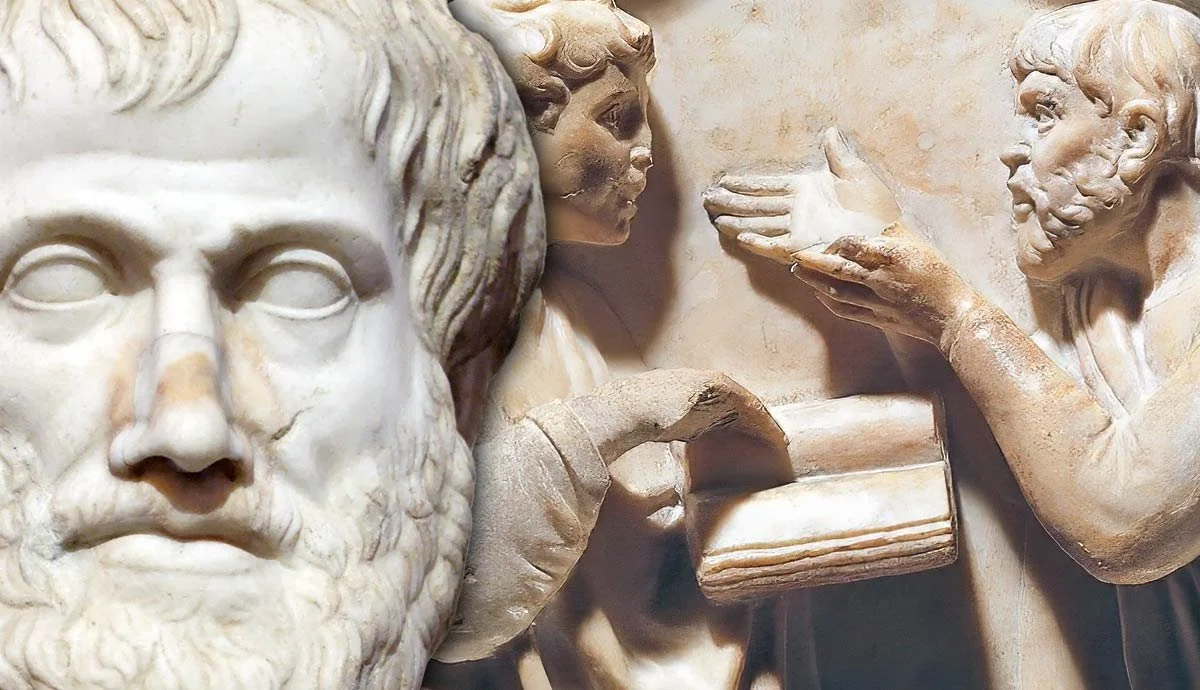
The ancient Greeks, many of whom possessed a capacity of thought that few people do today, were puzzled by the same age-old question that I am posing in this text: what is knowledge? They had a platform for integrated knowledge that today is either misunderstood or pushed aside, which is a pity, because it could be a strong philosophical support for a change in our perspective. Greek philosophers used a very important word that has no direct translation into English. The word is nous. Some translate it as “mind,” but this is inaccurate if we examine it closely. It was first introduced by Anaxagoras and later extensively written about by Plato and Aristotle. Nous represented the highest part of the soul, responsible for understanding truth, a source of intuitive understanding, divine insight, and reason. What was considered knowledge, or wisdom, was the total understanding of all layers of reality simultaneously, and nothing less. Absolute Truth, in its complete form, was seen as a guiding light for the nous. The Greeks, however, understood that we can never grasp the Truth fully because of the limitations of our perception, but saw the duty of a human being in remaining engaged with approaching it. This view invites humility and constantly reminds us that the Truth remains the highest value to strive toward, offering a possibility for perpetual motion. The non-achievable goal is a good goal to have.
Anaxagoras described nous as a cosmic principle that governs the universe, an animating spirit that organizes matter, a driving force behind cosmic order. Compared to Heraclitus’ ideas of “reason,” or logos, behind all living things, nous refers to a much more holistic understanding of reality. It includes reason but is not limited to it. Anaxagoras believed that the principle that organizes things cannot be of the same quality as the things it organizes; therefore, nous is not a material entity but an abstract, ephemeral one. He suggested that humans can reach understanding by starting from sensory experience and then moving beyond it through reason, and that the nous was responsible for this process. For him, these two stages formed an inseparable part of understanding first principles. Plato developed this idea further and included the importance of recognizing “the Forms”: conceptual, abstract, and unchanging blueprints of everything in the world. For him, however, sensory experience became suspicious, and he placed a strong emphasis on the thinking faculty of the human being, which eventually led to the mind–body split that plagues our societies to this day.
Nous is not synonymous with the mind, even though it does contain it. The key aspects of nous are several:
Intellectual understanding: the ability to grasp universal truths and abstract concepts beyond sensory experience
Divine and cosmic: for Greek philosophers, the unmixed, intelligent, divine, and immortal mind that organizes the universe
The soul: the highest part of a human being, allowing us to perceive the divine
Intuition and insight: a form of direct, intuitive knowing; a spiritual centre
For the ancient Greek philosophers and early Christians alike, nous was seen as a form of spiritual and intellectual “organ” capable of grasping reality beyond bodily senses, while working in conjunction with them to gain deep understanding of the Truth.
Aristotle distinguished different types of knowledge that can be developed through the faculty of nous:
Episteme (scientific knowledge): knowledge of universal truths that can be demonstrated through first principles - knowing what
Techne (craft/skill): knowledge of how to do something; practical success - knowing how
Phronesis (practical wisdom): knowledge of how to act in a given situation to achieve the human good, involving both general principles and specific situational awareness - application
What makes Aristotle’s framework so relevant today is that modern psychology has arrived at similar distinctions, because these categories reflect genuine features of how humans actually come to know things. This framework echoes in concepts such as declarative knowledge (the what) - the collection of data and information, which is the basic building block of understanding something; procedural knowledge (the how) - skills and abilities that one can apply; and conditional knowledge (the why) - understanding the concepts and conditions for applying previous knowledge successfully. We can also categorize knowledge into explicit knowledge - easily articulated in words, and implicit knowledge - personal, intuitive, hard to formalize, yet easily applied in a given situation. Including these ideas in our concept of knowing is very useful. We should not limit ourselves to a single source, neither in the philosophy we apply nor in the methods we use to extract and apply information. What both the ancient and modern frameworks point to is the same insight: knowing is not a single act but a spectrum of engagement with reality. The ancient Greeks understood this intuitively and gave a framework to an entire civilization; modern psychology has merely systematized what they observed. This shows us that it is important to have an intellectual scaffolding for modelling the world, but we can and should seek and use our own experience. We need more skin in the game. The what without the how and the why does not give us sufficient insight.
The modern world, dominated by words and credentials, is plagued with the disease of confusing the acquisition of information with knowledge. Empirical, practical learning is not esteemed very highly; the capacity to recall and collect facts is. This became much worse during the industrial era, because it was institutionalized. This is the result of a school system that needed to create efficient workers, not efficient thinkers. In contrast to this, the status of academia was elevated, and scientists became the priests of our times; but academia is known for its sin of often mistaking the theoretical world for the real one. As the famous saying goes: “In theory, practice and theory are the same, but not in practice.” Social media amplifies both the disease of data recollection and people’s attachment to their beliefs. The assumption that this combination creates - that information heard somewhere is enough to know something - puts us in a tricky position, where we stop attempting to verify what we hear in practice. This puts us in a situation in which reality constantly crashes down on us. We say we know, but the way our lives look does not communicate the same.
So where did we go wrong? The problem is not that we know too little - we are drowning in information. The real issue is that we mistake collecting information for wisdom, information that we do not even take a moment to verify. We confuse the map for the territory. But we must recognize that a Wikipedia page is not knowledge, just as a theory about swimming is not the same as being in the water. To know something means to engage with it fully: with your mind, yes, but also with your senses, your intuition, and your capacity to act. It means testing your ideas against reality instead of protecting them from it.
We have lost this. We protect our beliefs like possessions because we think they define us. We debate theories while lacking the experience to judge them. We read about life instead of living it, then wonder why reality keeps surprising us, why things never work out the way they should “in theory.” But we must see the truth: knowledge that exists only in your head is not knowledge at all. And this is fine. Not-knowing is the condition that makes learning possible. We should not treat it as a problem to solve. When you accept that you do not know, you become capable of seeing what is actually there instead of what you want to be there. The real question is not whether you “know” something, but whether your knowledge transforms how you act in the world, how you see things, and, most importantly, how you live your life. That transformation only happens in practice, in the constant movement between not-knowing and attempting to know. This is the ancient path, and it remains the only one.